Pizza as Self-Discovery
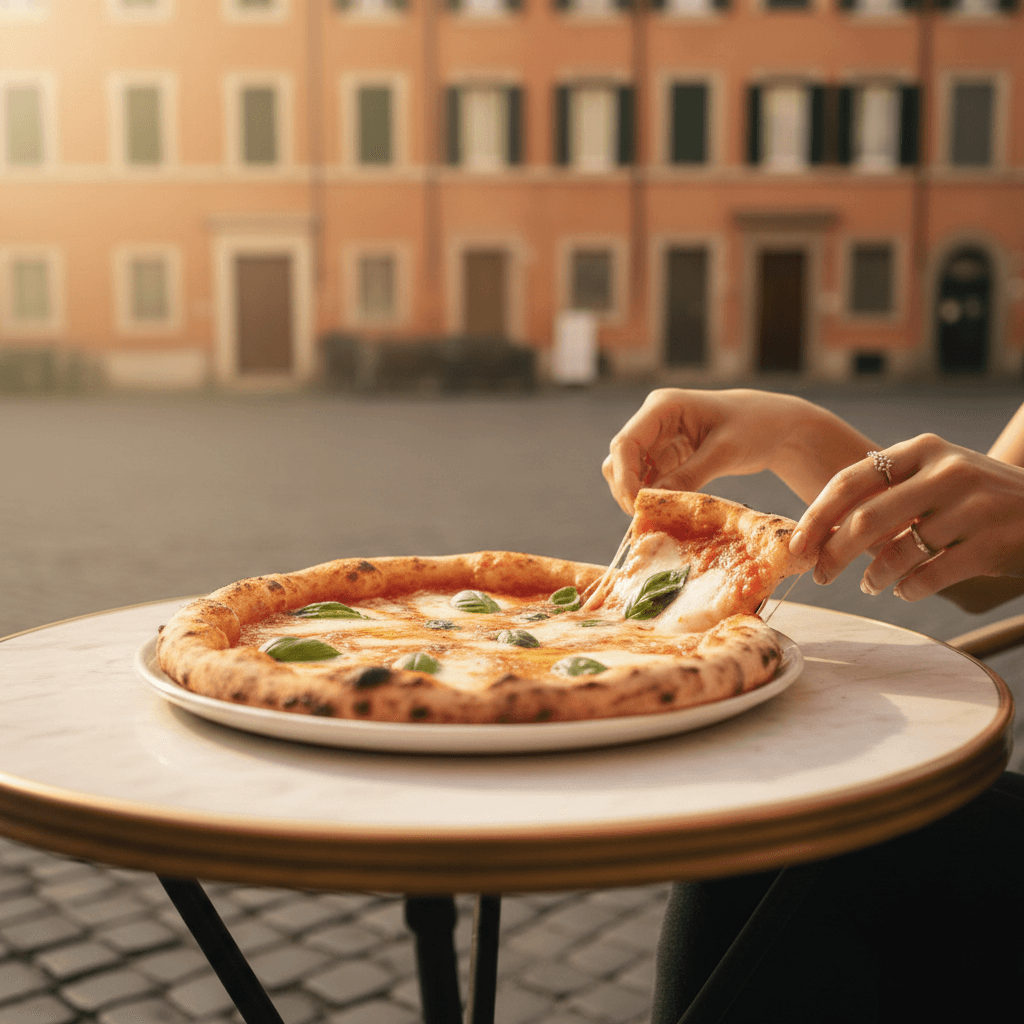
Julia Roberts discovers that sometimes the path to healing runs through a perfect Roman pizzeria, where guilt takes a backseat to pure, unapologetic pleasure.
This page contains affiliate links. If you purchase through these links, we may earn a commission at no extra cost to you. Learn more.
Culinary Cinema Editor
The Liberation of Letting Go
In Rome, Elizabeth Gilbert doesn't just eat pizza—she surrenders to it. After months of denial and self-punishment following her divorce, this simple act of indulgence becomes a form of rebellion against her own perfectionism. Sometimes healing looks like extra cheese and zero guilt.
Roman Pizza Culture
The pizza scene in "Eat Pray Love" captures something essential about Roman food culture: eating isn't just sustenance, it's celebration. The paper-thin crust topped with simple, perfect ingredients represents the Italian philosophy that the best food comes from respecting quality ingredients rather than overcomplicating them.
Permission to Pleasure
What makes this scene powerful isn't the pizza itself—it's Elizabeth giving herself permission to enjoy it without guilt. For someone who's spent months analyzing her life choices and beating herself up over past decisions, this moment of pure, uncomplicated pleasure becomes revolutionary. Sometimes self-care looks like saying "yes" to what you want.
The Art of Simple Perfection
Roman pizza al taglio—pizza by the slice—represents the pinnacle of simple done right. The dough is stretched paper-thin, the tomato sauce is barely sweetened, the mozzarella is fresh and creamy. There's nowhere to hide behind fancy toppings or complex preparations. Each ingredient must be perfect because there are so few of them.
Food as Connection
Throughout the film's Italy sequence, food becomes Elizabeth's way of connecting with the world around her. The pizza scene isn't just about eating—it's about sitting in a Roman piazza, watching life unfold, feeling part of something larger than her own problems. Food becomes a bridge between isolation and community.
The Guilt-Free Zone
Elizabeth's internal monologue during her pizza indulgence is revealing: she's not just eating pizza, she's actively fighting against years of food guilt and diet culture programming. The act of eating without restriction becomes a form of feminist statement—reclaiming pleasure that society tells women to deny themselves.
Italian Food Philosophy
The Romans in "Eat Pray Love" embody a food philosophy that Americans often struggle with: eat good food, enjoy it completely, then move on with your life. There's no obsessing over calories, no guilt-spiraling over indulgence. Food is meant to be one of life's great pleasures, not a source of shame.
The Social Aspect
Notice how Elizabeth doesn't eat alone—she's surrounded by the energy of Roman street life. Pizza al taglio is designed to be eaten standing up, quickly, while life happens around you. It's social eating without the pressure of formal dining. You grab a slice, chat with the pizzaiolo, and become part of the neighborhood rhythm.
Authentic Roman Technique
Roman pizza differs from its Neapolitan cousin in crucial ways: the dough is crispier, stretched thinner, and often made with olive oil for extra flavor and texture. It's cooked in rectangular pans and served in squares, designed for quick consumption by busy Romans who want quality food without fuss.
Recreate at Home (Roman Style)
Making Roman-style pizza at home requires a lighter touch than thick-crust American versions:
- Ultra-thin dough - Roll it so thin you can almost see through it
- High-quality olive oil - Both in the dough and drizzled on top
- Minimal toppings - Let each ingredient shine, don't pile them on
- Hot oven - Crank it as high as it will go for that crispy-chewy texture
- Quality ingredients - San Marzano tomatoes, real mozzarella, fresh basil
The Roman approach is about restraint—resisting the American urge to load everything on top. Sometimes less really is more.
The Metaphor of Nourishment
Elizabeth's pizza becomes a metaphor for how she needs to nourish herself emotionally. Just as she was starving herself of food, she was starving herself of joy, pleasure, and simple contentment. The pizza represents learning to feed all parts of herself, not just the part that thinks she should be suffering.
Beyond the Tourist Experience
While "Eat Pray Love" sometimes veers into tourism cliché, the pizza scenes feel authentic because they capture something real about Roman culture. This isn't about checking off a travel bucket list—it's about discovering that different cultures have different relationships with pleasure, and maybe it's time to learn from them.
The Ripple Effect
This single pizza scene sets up Elizabeth's entire Italian journey. By learning to eat without guilt, she begins learning to live without constant self-criticism. It's a small step, but revolutionary for someone who's spent years denying herself simple pleasures.
The beauty of this scene is its universality—we've all had moments where we needed permission to enjoy something without analyzing it to death. Sometimes the most profound act of self-care is as simple as ordering the pizza you actually want and eating it with complete, unapologetic pleasure.